B2B Cashmere Sampling with No MOQ · Production MOQ 12 Pcs/Color · Kathmandu Atelier
Responsible development · Clear material claims
Responsible material choices, supported by evidence
Consider material routes, construction, finishing and documentation when developing cashmere. Claims are reviewed for the actual article and relevant scope.
Start with the proposed material
A useful sustainability discussion concerns the actual yarn and product proposed for your order. Ask about composition, material source and the supporting information available. Cashmere’s natural origin does not, by itself, establish the environmental impact of a finished garment.
Tell CashMire Collection if your brand requires a particular certification or documented sourcing condition before selecting a yarn. Availability and the scope of evidence need to be checked. A supplier name is not certification for every material in that supplier’s range.
Develop for repeated use
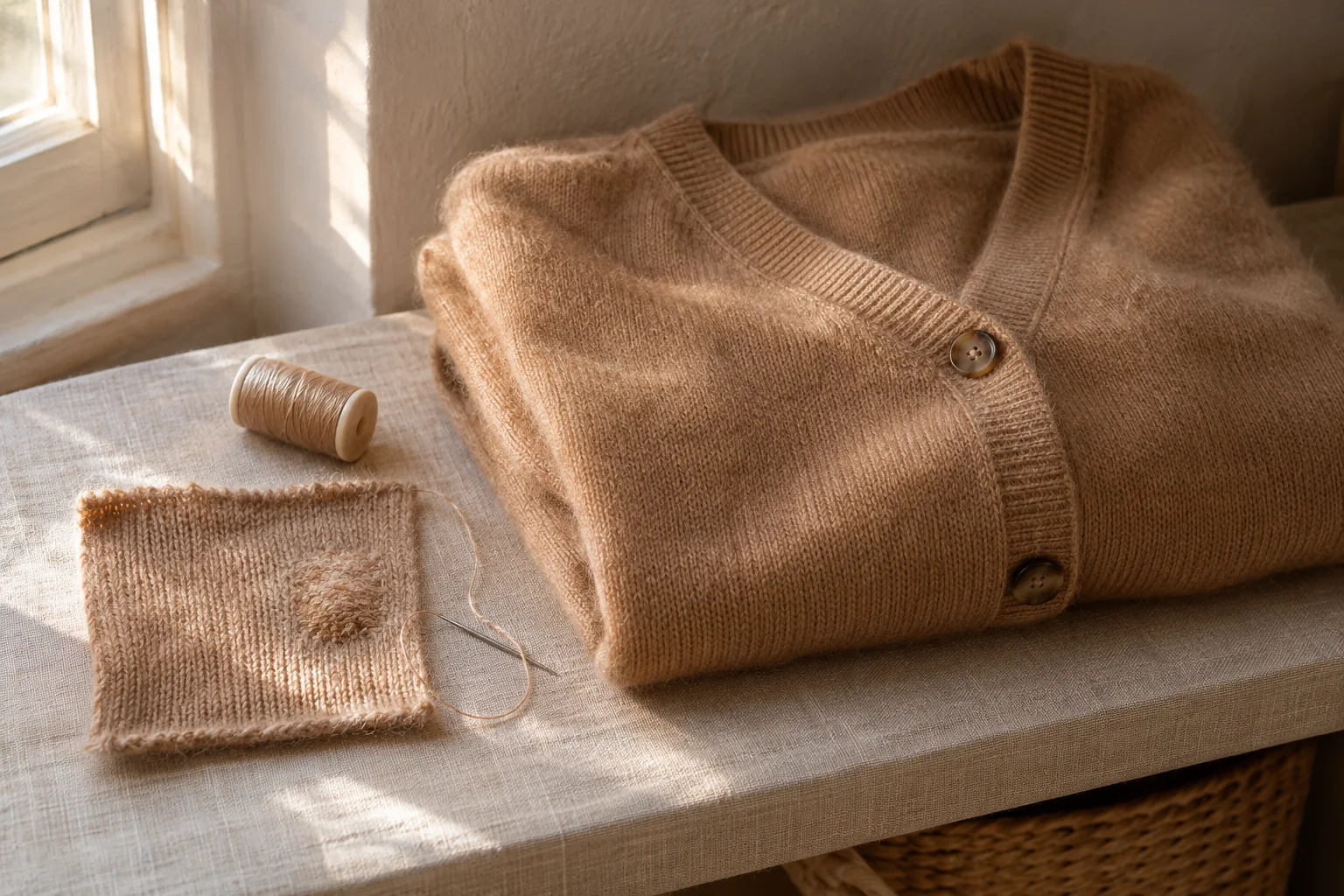
Fit, construction and care information influence whether a piece stays in use. Review more than appearance when approving a sample: consider how the customer will layer, clean and store the item, and whether its proportions suit that use.
Share the intended use with us while material and finishing changes can still be discussed. Durability needs to be assessed on the proposed product rather than inferred from a luxury description.
Plan the range deliberately
Production starts from 12 pieces per style and colorway. A focused opening range can support deliberate assortment decisions, but a low minimum is not evidence of zero waste or a particular carbon saving. Sampling without an MOQ allows development decisions to be reviewed first; charges may apply.
Consider whether each additional colour has a clear place in the range. For packaging, explain the distribution route and required presentation before approving the specification. Ask about evidence for the specific claim you need rather than assuming every product is certified, carbon neutral or impact free.