B2B Cashmere Sampling with No MOQ · Production MOQ 12 Pcs/Color · Kathmandu Atelier
Approved sample · Written specification
From yarn reference to finished order
Understand the cashmere production stages: material preparation, knit or woven construction, assembly, finishing, inspection and dispatch planning.
Production window
35–45
Indicative days; schedule confirmed for the order
Process stages
06
Material through dispatch
Quality reference
Agreed
Tolerances agreed in the specification
Approval basis
Sample
Finished sample and order documents
TWO FABRIC ROUTES
Knitted garments and woven products start differently.
Choose the construction for the intended product. The knitwear route shapes fabric through stitches; the woven route interlaces warp and weft. Each needs its own material, dimensions and finishing review.
KNITWEAR ROUTE
Panel development · Assembly · Finishing
WOVEN ROUTE
Warp & weft · Edge finishing · Appearance review
FROM INPUTS TO FINISHED GOODS
The six-stage production pathway
STAGE 01 / 06 · INPUT VERIFICATION
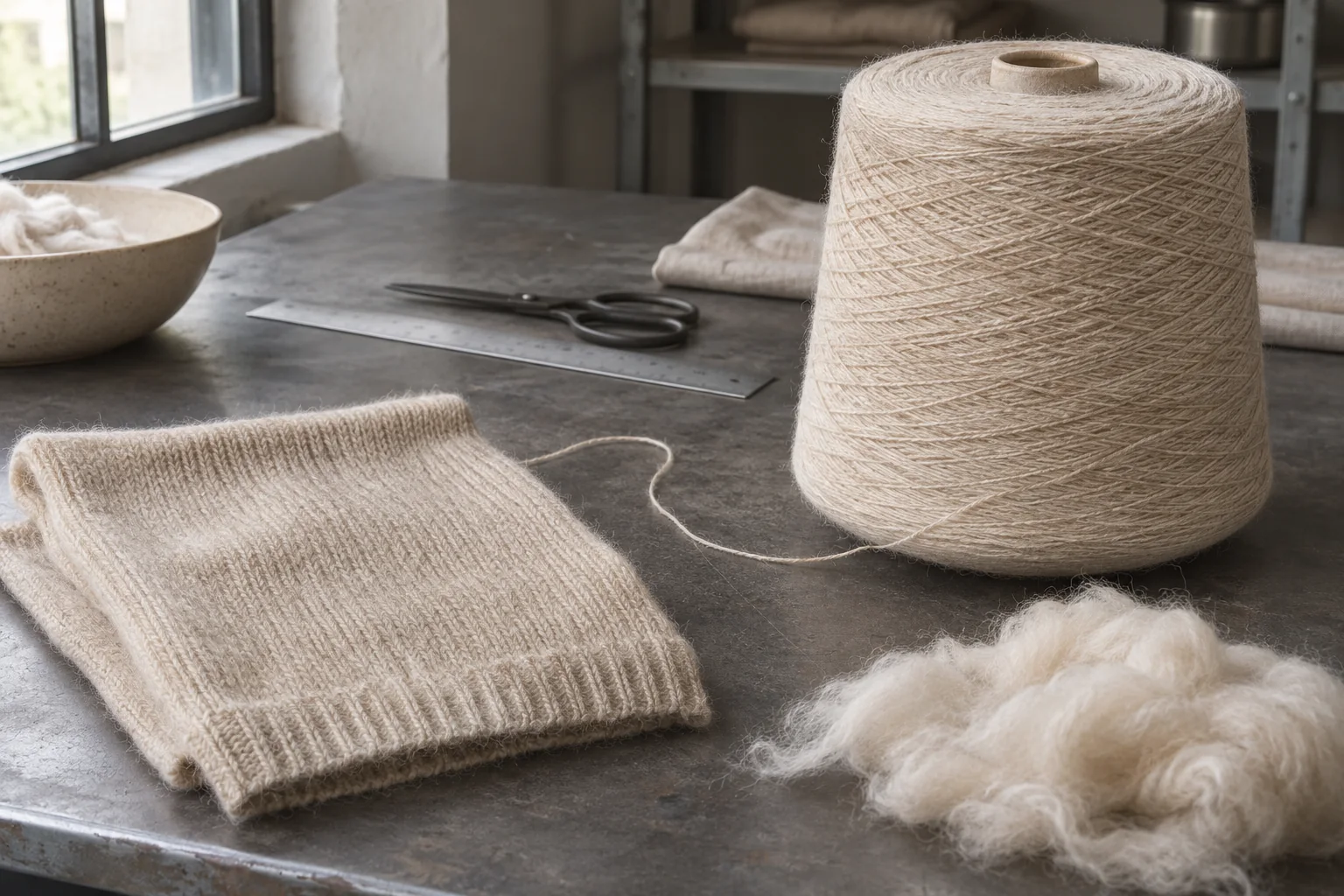
Material review & preparation
APPLIES TO: KNITWEAR & WOVENS
Confirm the yarn article, shade and lot against the approved brief. Review composition and any supporting supplier records required by the buyer. Material preparation is selected for the construction; specialised testing is included only when agreed.
YARN ARTICLE
Confirm for the order
MATERIAL PREPARATION
Appropriate to the yarn
STAGE 01 // YARN & MATERIAL REFERENCES
STAGE 02 // FABRIC CONSTRUCTION
STAGE 02 / 06 · FABRIC FORMATION
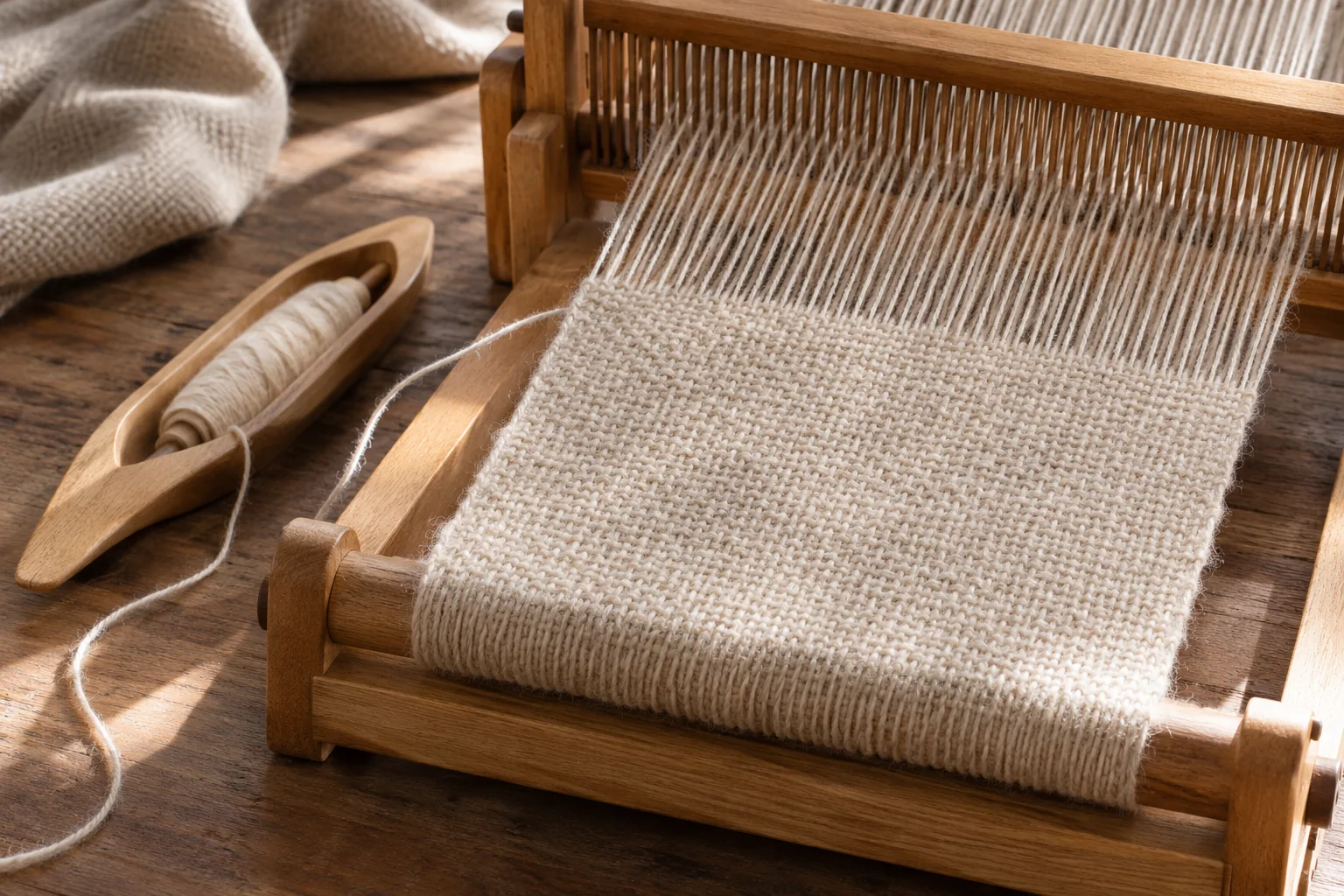
Knitting or weaving
KNITWEAR: GAUGE REVIEWED WITH THE YARN
WOVENS: COUNT AND WEAVE REVIEWED TOGETHER
The intended product determines the fabric route. Knitted garments may be developed through shaped panels and appropriate stitches; woven scarves or homeware require a suitable warp-and-weft construction. The sample establishes the appearance, weight and dimensions to review.
PRODUCT-SPECIFIC CONSTRUCTION
Review the relationship between material, fabric formation and assembly on a physical sample before the production approach is approved.
STAGE 03 / 06 · ASSEMBLY PRECISION
Assembly & detail application
APPLIES STRICTLY TO: FASHIONED KNITWEAR
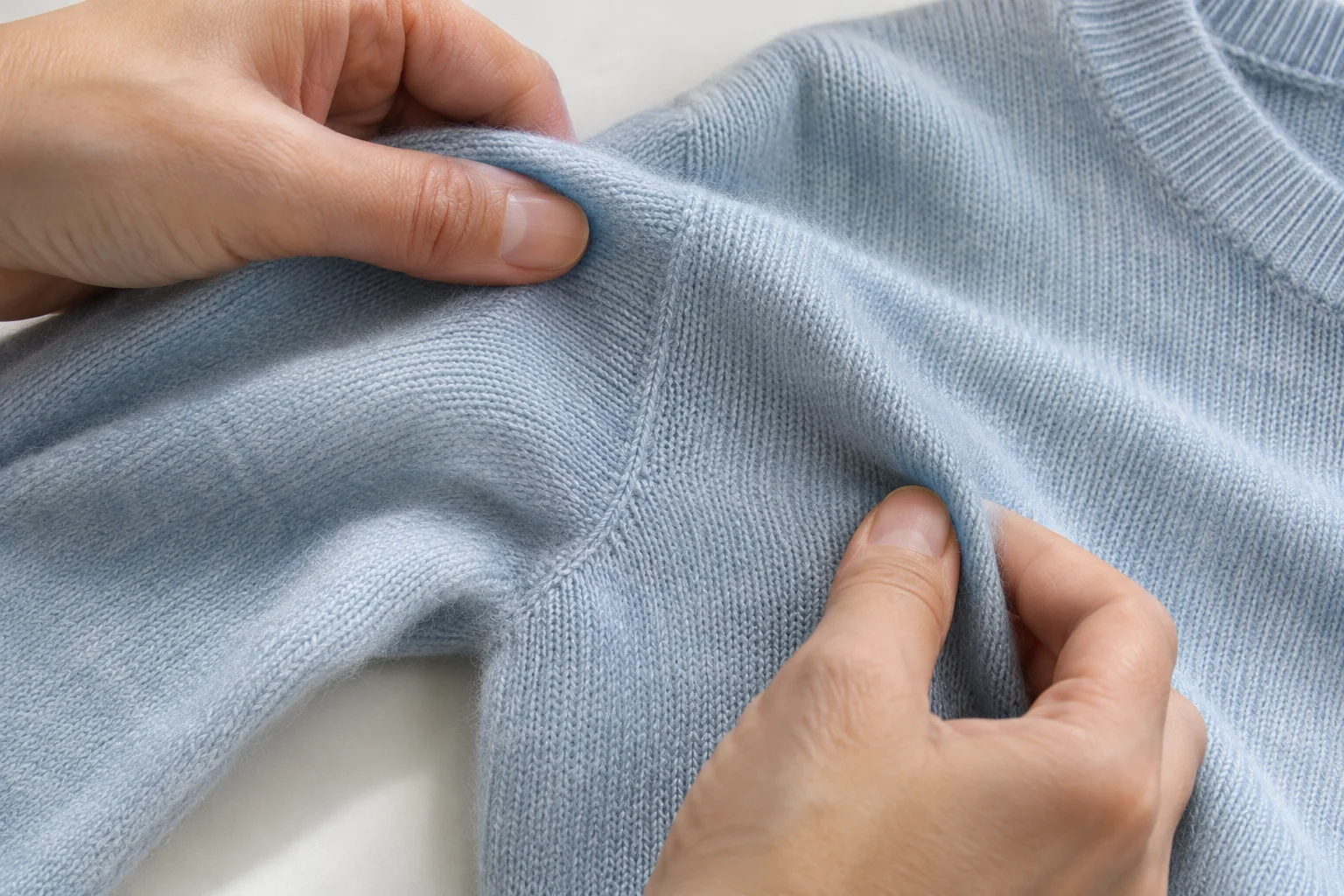
Where the product uses separate knitted panels, assembly must suit the yarn, gauge and intended seam. Necklines, sleeves, openings and trims are reviewed as part of the complete garment rather than treated as independent decorative features.
- ▪Assembly is selected for the intended construction.
- ▪Yarn, gauge and seam requirements are reviewed together.
- ▪The finished sample establishes the feel and appearance to approve.
STAGE 03 // PANEL ASSEMBLY
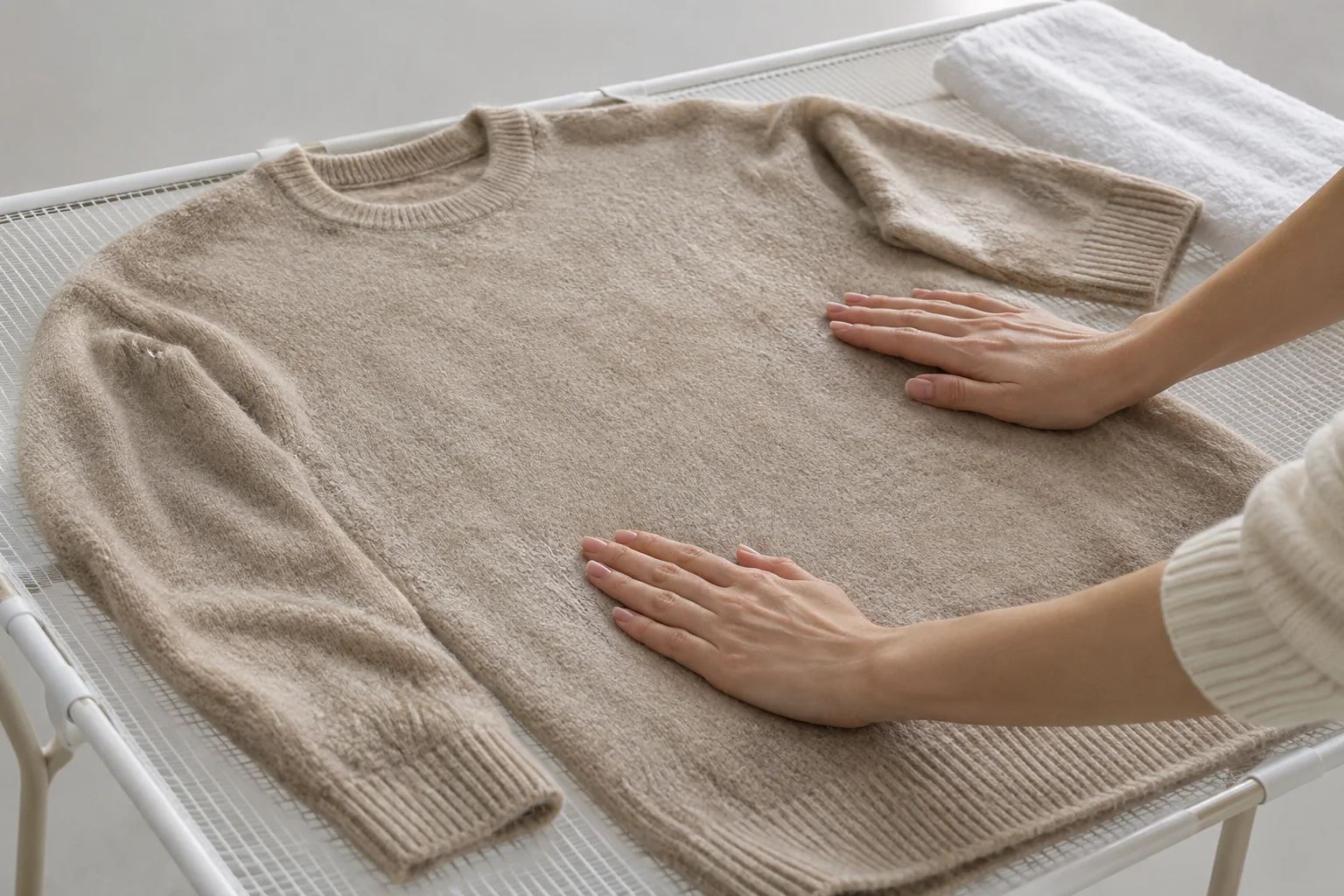
STAGE 04 // WASHING & FINISHING
STAGE 04 / 06 · WET PROCESSING
Washing & finishing review
APPLIES TO: KNITWEAR & WOVENS
Finishing changes handle, dimensions and surface appearance. Review the finished sample before confirming the product specification. Process requirements are selected for the material; no universal chemical-free or water-chemistry claim is made for every article.
FINISHING METHOD
Selected for the material
PROCESS REQUIREMENTS
Agreed with the brief
STAGE 05 / 06 · FORM STABILIZATION
Measurement & final presentation
APPLIES TO: KNITWEAR & WOVENS
Compare the finished garment with the approved measurements and tolerances. Review proportions, visible appearance and the required finish. A tolerance is an agreed product criterion, not a promise that a natural-fibre garment will never change through use or care.
MEASURE AGAINST THE APPROVAL
Review the finished dimensions at the agreed measurement points. Any tolerances should be recorded with the approved product specification.
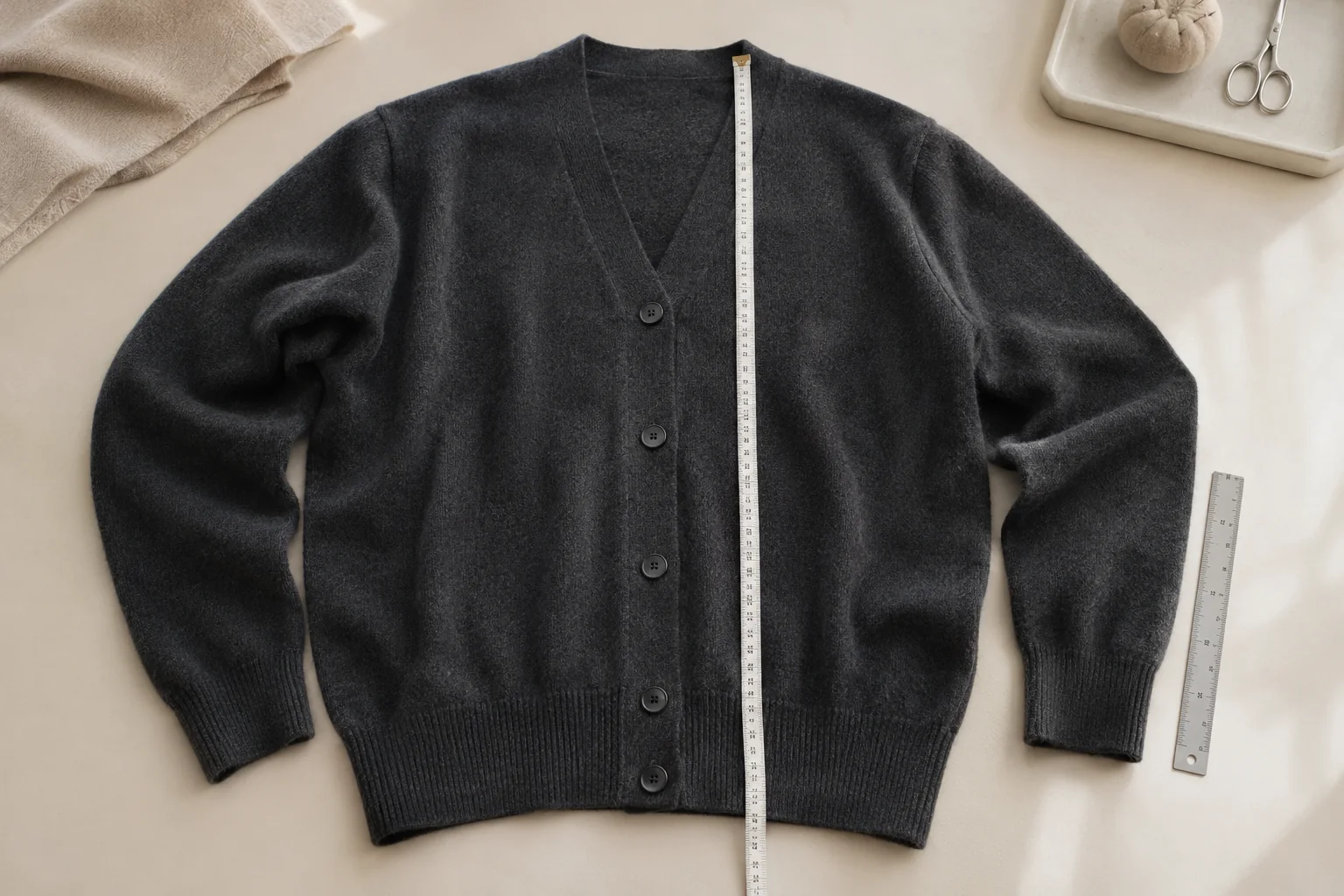
STAGE 05 // MEASUREMENTS & PRESENTATION
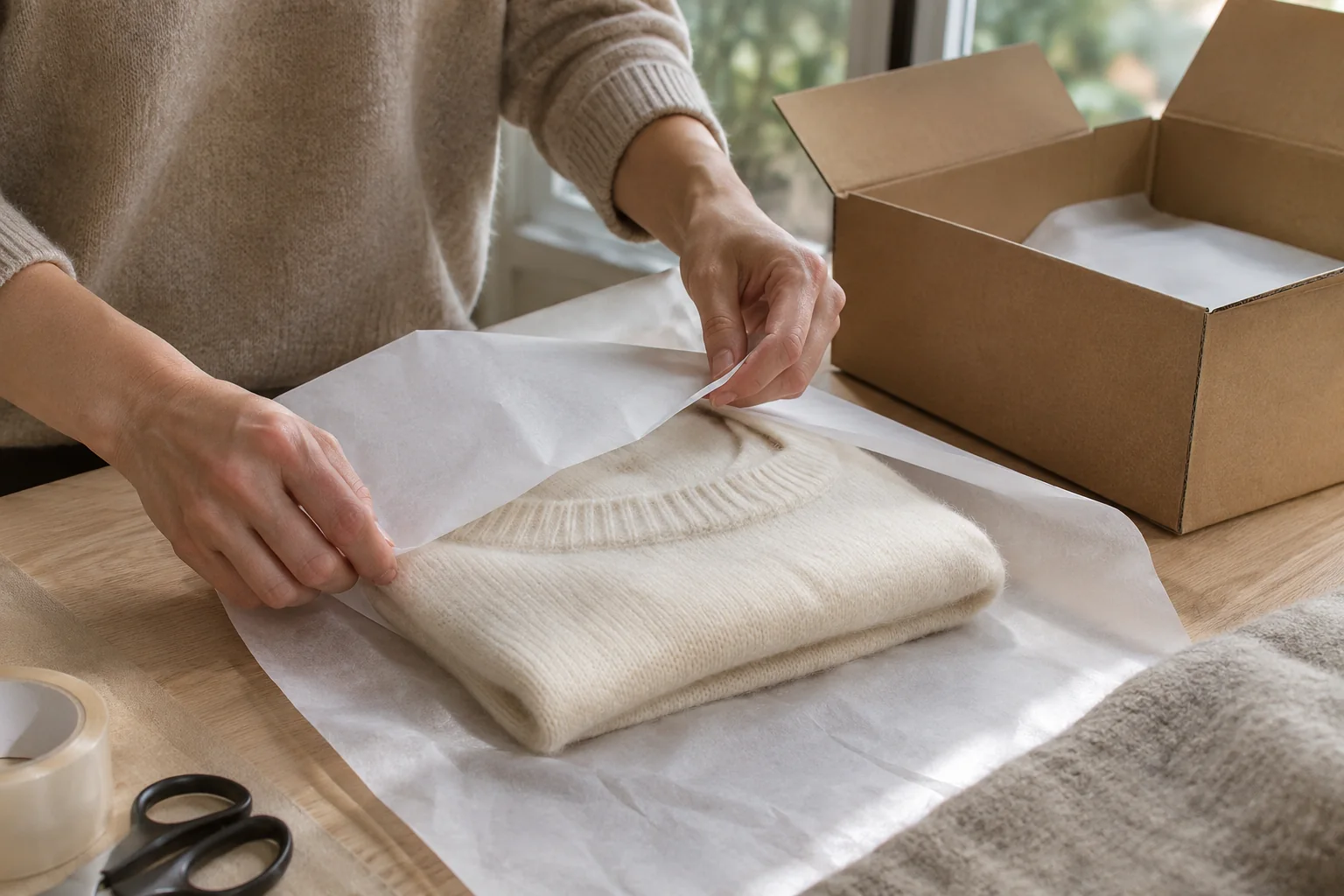
STAGE 06 // INSPECTION & PACKING
STAGE 06 / 06 · RELEASE & LOGISTICS
Inspection, packing & dispatch
APPLIES TO: KNITWEAR & WOVENS
Review the completed order against its agreed inspection and presentation requirements. Labels, packing instructions, quantities and shipment details should be checked before handover to the agreed courier or freight route from Kathmandu.
INSPECTION SCOPE
Agreed for the order
PACKING INSTRUCTIONS
Confirmed before dispatch
DEVELOPMENT PLANNING
Illustrative gauge and product directions
Use these examples to discuss a starting construction. They are not a machine inventory, stock promise or daily output commitment. The actual combination is established through development.
Discuss the production window required by your collection
| Development direction | Illustrative yarn construction | Stitch / weave direction | Products to discuss | Planning basis |
|---|---|---|---|---|
| 3GG Chunky | 2/16 Nm · 6 to 8-ply | Fisherman rib, chunky cable braid, basket weave | Winter overcoats, heavy cardigans, ski turtlenecks | Order-specific |
| 7GG Heavy | 2/26 Nm · 4-ply | English rib, moss stitch, honeycomb, cardigan stitch | Substantial crewnecks, winter wraps, travel hoodies | Order-specific |
| 12GG Classic | 2/28 Nm · 2-ply | Plain jersey, Milano rib, engineered needle drops | Core luxury crewnecks, V-necks, fine cardigans | Order-specific |
| 16GG Fine | 2/48 Nm · 2-ply | Micro-jersey, high-twist rib trims, multi-color intarsia | Spring lightweight knits, polo collars, luxury tees | Order-specific |
| 18GG Gossamer | 1/60 to 2/80 Nm | Featherweight jersey, delicate pointelle openwork | Second-skin base layers, transparent knit shells | Order-specific |
| Hand-Loom Woven | 60/1 to 200/2 Ring | Diamond eyelet weave, 2/2 twill, hand eyelash fringes | Chyangra ring-shawls, travel stoles, fringed throws | Order-specific |
* Examples support the development discussion. Product availability and production scheduling are confirmed for the individual order.
Discuss a construction requirement before committing to a sample.
Define the evidence you need
Quality requirements before production begins.
Inspection criteria should be understandable to both teams. Identify what must be checked, how it will be assessed and which reports are part of the agreed scope.
Dimensional stability requirements
Agree the dimensional-stability requirements and care instructions for the selected material. If a named test is required, confirm the method and reporting scope before production.
Surface appearance & wear expectations
Material, construction, finishing and use affect surface appearance. Establish the intended performance requirements and any test programme for the individual product.
Colour performance requirements
Colour performance requirements should be matched to the material and intended use. Ask which supplier information or agreed test results support the relevant claim.
ORDER REVIEW CHECKLIST
REQUIREMENTS CONFIRMED BEFORE PRODUCTION
Record the criteria behind approval.
DIMENSIONS & CARE
Agree the test scope
SURFACE APPEARANCE
Review material evidence
ASSEMBLY & FINISH
Assess the sample
COLOUR PERFORMANCE
Confirm the requirement
Ask which tests and documents are relevant and available for your order.
SHIPMENT REVIEW
Prepare the next production discussion
Bring your product specification to the conversation.
Share drawings, material references, quantities and the intended delivery window. Sampling is indicative at 7–14 days; the actual development and production schedules are confirmed separately.
▪ Specification-led construction
▪ From 12 pcs / style and colorway
▪ Dispatch planning from Kathmandu
Resolve conflicting specifications before starting
Your approved sample, measurement chart, colour reference, label artwork and packing instructions should describe the same version. Resolve conflicting notes and confirm who can approve changes on your side before the order moves into production.
CashMire Collection’s indicative 35–45-day production period is confirmed against the approved order and material plan. If the specification changes after approval, discuss its effect on that plan. Transport time remains separate from production.